Product Gallery
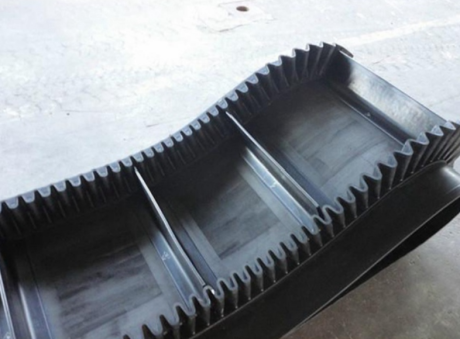
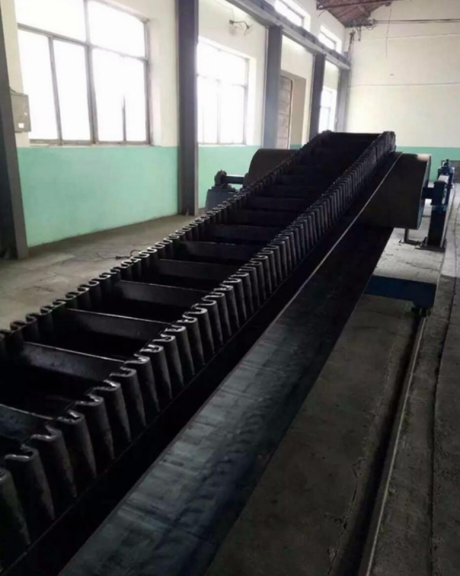
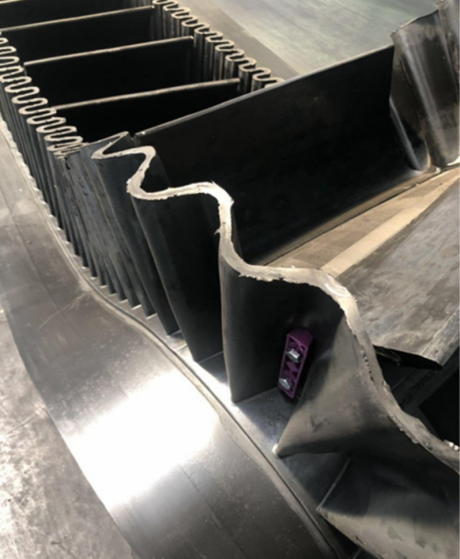
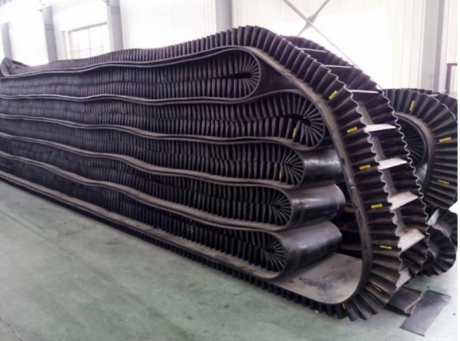
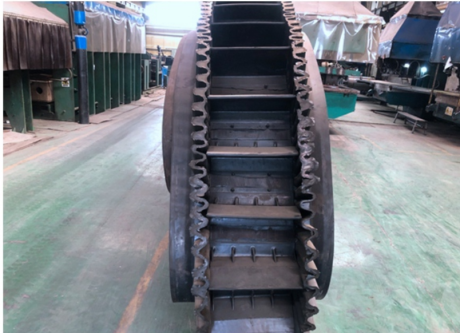
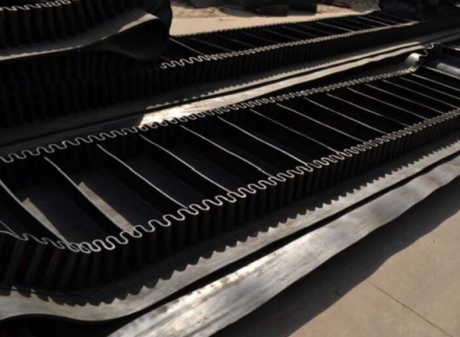
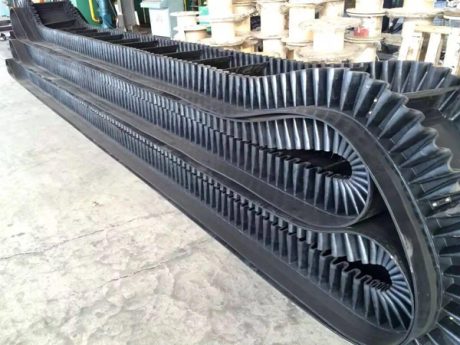
Corrugated sidewall conveyor belts are suitable for steep-angle and vertical bulk material conveying systems. Corrugated sidewalls help keep materials on the belt, while cleats improve lifting capacity and reduce material spillage during operation.
Technical Data
| Belt Item | Common Options | Application Notes | Customizable |
| Belt Width | 400–2000 mm | Selected according to capacity and conveyor layout | Yes |
| Sidewall Height | 40–240 mm | Higher sidewalls are used for larger material volume | Yes |
| Cleat Type | T / TC / C / custom cleats | Selected according to material type and conveying angle | Yes |
| Conveying Angle | 30°–90° | Suitable for steep-angle and vertical conveying | Project-based |
| Base Belt | Fabric belt / rubber belt structure | Selected according to strength and working conditions | Yes |
Note: The suitable sidewall height, cleat type and belt structure depend on material size, conveying capacity, belt speed, conveying angle and working conditions. Please contact us for a customized recommendation.
Corrugated Sidewall Conveyor Belt Buyer Questions
These answers help buyers confirm whether a corrugated sidewall conveyor belt is suitable for steep-angle or vertical bulk material conveying before sending an RFQ.
What is a corrugated sidewall conveyor belt used for?
A corrugated sidewall conveyor belt is used for steep-angle and vertical bulk material conveying where a standard flat belt may not provide enough material retention.
It is commonly used in mining, cement plants, ports, grain handling, recycling plants, power plants and other industrial material handling systems.
When should buyers choose a sidewall belt instead of a flat belt?
Buyers should choose this type of belt when the conveyor layout requires a steep conveying angle, vertical lifting, limited floor space or better control of material spillage.
Compared with a flat belt, the sidewall structure and cleats help keep bulk materials on the belt during inclined conveying.
What information is needed before quotation?
Please provide the material type, particle size, material moisture, conveying angle, lifting height, belt width, sidewall height, cleat type, cleat spacing, belt speed and load capacity.
A conveyor layout drawing or site sketch can help confirm the belt structure faster.
What are sidewalls and cleats used for?
Corrugated sidewalls are used to help prevent material from spilling over the belt edges during steep-angle conveying.
Cleats are used to improve material lifting capacity and help move bulk materials upward more steadily.
Can the sidewall height, cleat type and belt width be customized?
Yes. Belt width, belt length, sidewall height, cleat type, cleat spacing, base belt structure, fabric layers and rubber cover grade can be customized according to conveying angle, lifting height, material type, load capacity and working conditions.